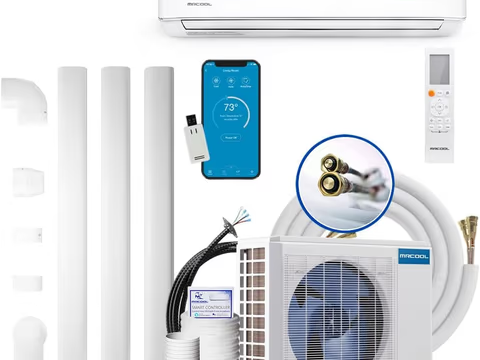
Best efficiency
Mini-splitENERGY STAR
MRCOOL DIY 4th Gen 12K
Cooling
12,000 BTU
Covers
500 ft²
Efficiency
22 SEER2
Noise
32 dB
$1099 est.
typical retail priceIdaho's populated southwest — Boise, Nampa, the Treasure Valley — is high-desert hot and dry: summers routinely hit the 90s and low 100s with low humidity and big day-to-night swings, while the northern panhandle and mountains stay cooler. Boise is one of the fastest-growing metros in the country, and AC is standard in the valley.
Updated June 2026
Dry-climate cooling is forgiving on humidity but demanding on sun and peak temperature — let sun exposure drive sizing and check a unit's maximum operating temperature for the hottest afternoons. Evaporative ('swamp') coolers work in Idaho's dry shoulder months; for the July peak, refrigerant AC is the reliable choice. Cheap hydropower keeps bills low.
Estimated at Idaho's average residential rate (~11¢/kWh, approximate) and 8 hours/day. "Per season" assumes 4 cooling months. Your utility rate and usage will vary.
| Unit | Efficiency | Est. / month | Est. / season |
|---|---|---|---|
| Senville LETO SENL-12CD Mini-split | 21.2SEER2 | $17 | $68 |
| LG Dual Inverter LW1022IVSM Window | 15CEER | $18 | $72 |
| BLACK+DECKER BPACT14WT Portable | 6.1CEER | $61 | $244 |
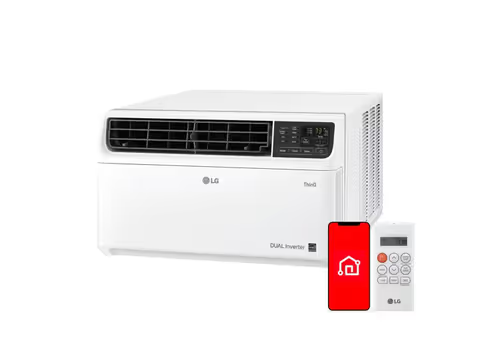
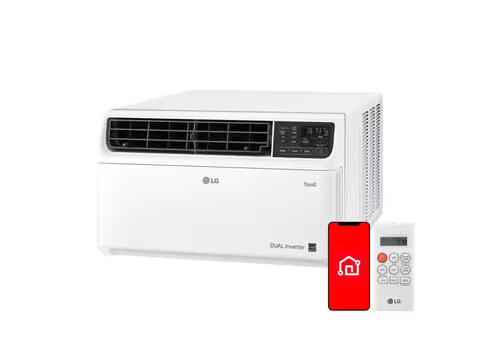
Use the Hot & Dry zone — about 8% above baseline for the heat, without a humidity penalty. A 300 ft² Boise room lands near 6,500–7,000 BTU, but a west-facing room in full afternoon sun should size up.
Yes, in the dry early and late summer — evaporative cooling is cheap and effective in Idaho's low humidity. During the hottest, occasionally smoky weeks of July and August, refrigerant AC is the more reliable choice.
At ~11¢/kWh — among the lowest rates in the country thanks to hydropower — an efficient 12,000 BTU unit runs about $18–26/month over Boise's hot, dry summer.
Electricity rates are approximate state averages; check your utility bill for your exact rate.