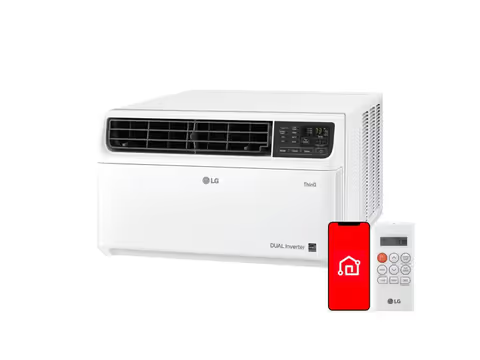
Editor's pick
WindowENERGY STAR
LG Dual Inverter LW1022IVSM
Cooling
10,000 BTU
Covers
450 ft²
Efficiency
15 CEER
Noise
44 dB
$429 est.
typical retail priceNorth Carolina spans three climates: the muggy coastal plain (Wilmington, the Outer Banks), the hot Piedmont where most people live (Charlotte, Raleigh), and the cooler Blue Ridge mountains. For the population centers, summers are hot and humid and cooling runs roughly May through September.
Updated June 2026
Most North Carolinians are in the Piedmont, so size for genuine summer heat, not the mountains' mild evenings. Humidity matters in the east — favor units with a strong dry mode. Coastal buyers should mind salt-air corrosion on outdoor coils.
Estimated at North Carolina's average residential rate (~15¢/kWh, approximate) and 8 hours/day. "Per season" assumes 5 cooling months. Your utility rate and usage will vary.
| Unit | Efficiency | Est. / month | Est. / season |
|---|---|---|---|
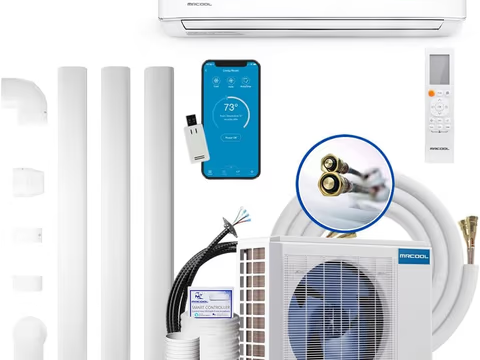
| Senville LETO SENL-12CD Mini-split | 21.2SEER2 | $23 | $115 |
| LG Dual Inverter LW1022IVSM Window | 15CEER | $23 | $115 |
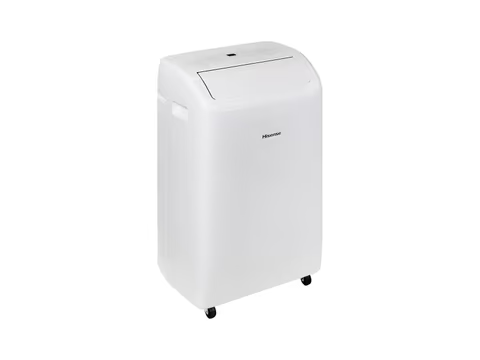
| BLACK+DECKER BPACT14WT Portable | 6.1CEER | $80 | $400 |
For the hot, somewhat humid Piedmont, use the Mixed/Temperate zone in our calculator and expect close to the 20 BTU/ft2 baseline plus a small humidity bump — a 300 ft2 room lands near 6,500-7,500 BTU.
An inverter window unit or a mini-split. Both handle the Piedmont's hot afternoons and coastal-plain humidity better than a fixed-speed unit that cycles on and off.
At ~14.6 cents/kWh and 8 hours a day, an efficient 12,000 BTU unit runs about $24-32/month over the state's roughly 5-month season.
Electricity rates are approximate state averages; check your utility bill for your exact rate.