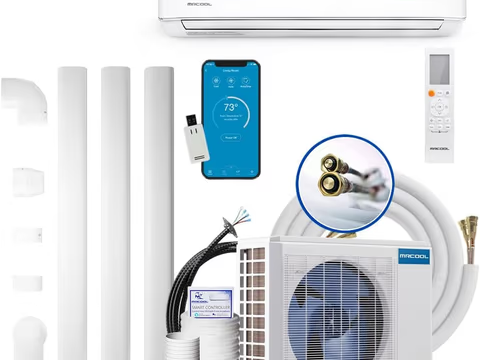
Best efficiency
Mini-splitENERGY STAR
MRCOOL DIY 4th Gen 12K
Cooling
12,000 BTU
Covers
500 ft²
Efficiency
22 SEER2
Noise
32 dB
$1099 est.
typical retail priceVermont summers are short and green, but the Champlain Valley and southern lowlands now see humid, hot stretches that make a few July and August weeks genuinely uncomfortable, while the Green Mountains stay cool. It's a low-AC state where heat-pump adoption — driven by strong state incentives — is rising fast for both cooling and heating.
Updated June 2026
Most Vermont homes need cooling only for the warmest weeks, so size conservatively. The standout option is a cold-climate heat-pump mini-split: it cools the hot stretches and heats efficiently through Vermont's long winter, and state and utility incentives often offset much of the cost. Check current rebates before you buy.
Estimated at Vermont's average residential rate (~22¢/kWh, approximate) and 8 hours/day. "Per season" assumes 3 cooling months. Your utility rate and usage will vary.
| Unit | Efficiency | Est. / month | Est. / season |
|---|---|---|---|
| Senville LETO SENL-12CD Mini-split | 21.2SEER2 | $34 | $102 |
| LG Dual Inverter LW1022IVSM Window | 15CEER | $35 | $105 |
| BLACK+DECKER BPACT14WT Portable | 6.1CEER | $121 | $363 |
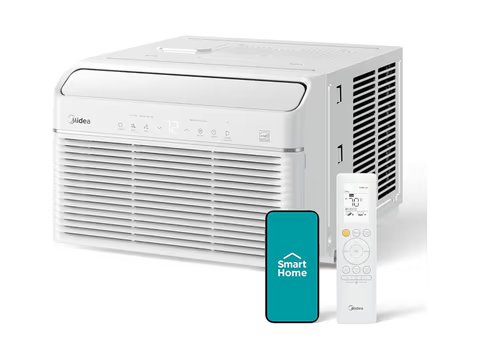
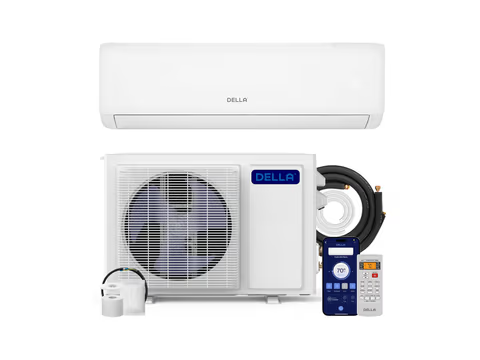
Very often, yes — a cold-climate heat-pump mini-split cools the few hot weeks and provides efficient heat through the long winter, and Vermont's utility and state incentives frequently cover a large share of the cost. Check current rebate programs before buying.
Use the Cool North zone — loads run slightly below the national baseline. A 300 ft² room sizes to about 6,000–7,000 BTU, toward the top in the humid Champlain Valley.
At ~22¢/kWh and used for a short season, an efficient 12,000 BTU unit runs about $36–48/month when running — and a heat-pump mini-split's efficiency helps on the heating side too.
Electricity rates are approximate state averages; check your utility bill for your exact rate.