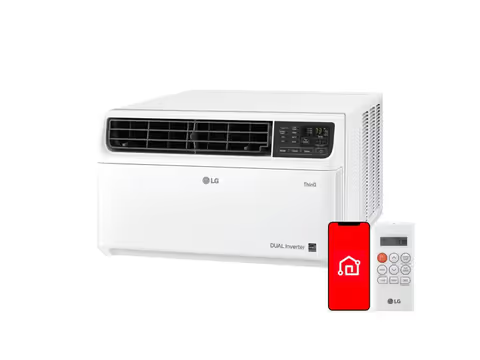
Editor's pick
WindowENERGY STAR
LG Dual Inverter LW1022IVSM
Cooling
10,000 BTU
Covers
450 ft²
Efficiency
15 CEER
Noise
44 dB
$429 est.
typical retail priceVirginia's humid subtropical climate makes Richmond, Hampton Roads, and the DC suburbs hot and sticky from late May into September, while the Blue Ridge stays milder. Tidewater humidity near the coast is the comfort headline for the state's biggest population centers.
Updated June 2026
Size for the Tidewater and Piedmont heat where most Virginians live, and favor strong dehumidification. Coastal Hampton Roads buyers should account for salt air on outdoor coils. At mid-range rates over a 5-month season, a high-efficiency inverter is worth it.
Estimated at Virginia's average residential rate (~16¢/kWh, approximate) and 8 hours/day. "Per season" assumes 5 cooling months. Your utility rate and usage will vary.
| Unit | Efficiency | Est. / month | Est. / season |
|---|---|---|---|
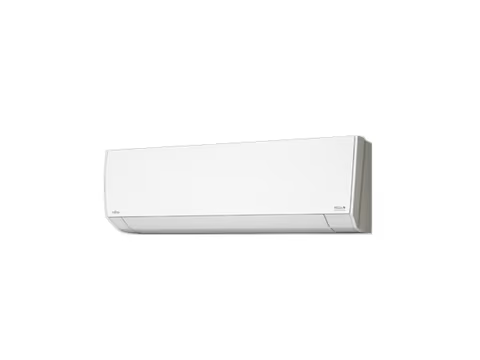
| Senville LETO SENL-12CD Mini-split | 21.2SEER2 | $25 | $125 |
| LG Dual Inverter LW1022IVSM Window | 15CEER | $26 | $130 |
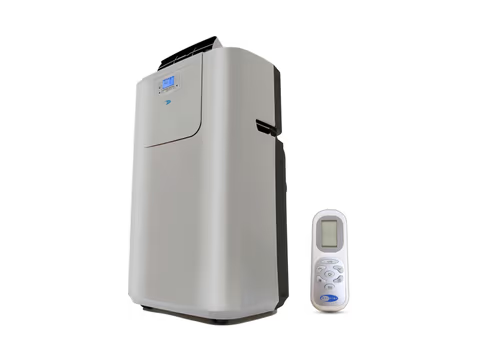
| BLACK+DECKER BPACT14WT Portable | 6.1CEER | $88 | $440 |
Use the Mixed/Temperate zone for the hot, humid lowlands. A 300 ft2 room lands near 6,500-7,500 BTU, toward the top in humid Tidewater.
Inverter window units and mini-splits — long low-speed cycles handle coastal Virginia's humidity far better than fixed-speed units.
At ~16 cents/kWh and 8 hours a day, an efficient 12,000 BTU unit runs about $27-36/month over the cooling season.
Electricity rates are approximate state averages; check your utility bill for your exact rate.