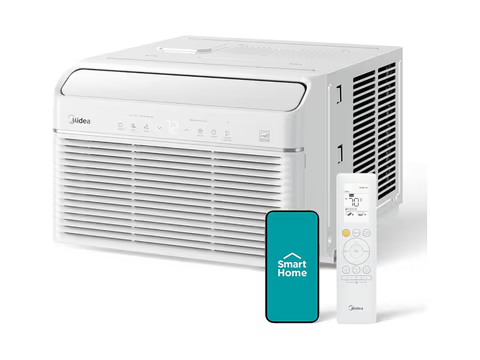
WindowENERGY STAR
Midea Smart MAW08HV1CWT
Cooling
8,000 BTU
Covers
350 ft²
Efficiency
14.5 CEER
Noise
50 dB
$379 est.
typical retail priceWashington is really two climates: the mild, historically AC-light west side around Seattle, and the hot, dry interior east of the Cascades (Spokane, the Tri-Cities) that bakes in summer. Recent heat domes have pushed even Seattle homeowners to add cooling, and cheap hydro power keeps running costs among the lowest in the country.
Updated June 2026
West-side buyers mostly need cooling for a handful of intense heat-wave weeks — one efficient unit or a heat-pump mini-split sized for the warmest rooms is plenty, and the mini-split doubles as winter heat. East of the Cascades, treat it as a dry-heat climate and size for the genuine summer peak.
Estimated at Washington's average residential rate (~11¢/kWh, approximate) and 8 hours/day. "Per season" assumes 3 cooling months. Your utility rate and usage will vary.
| Unit | Efficiency | Est. / month | Est. / season |
|---|---|---|---|
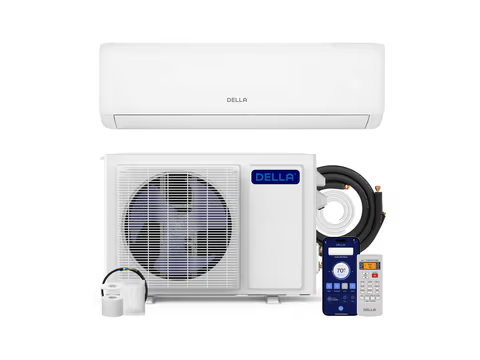
| Senville LETO SENL-12CD Mini-split | 21.2SEER2 | $17 | $51 |
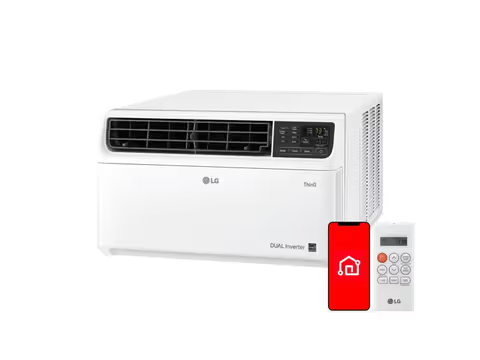
| LG Dual Inverter LW1022IVSM Window | 15CEER | $18 | $54 |
| BLACK+DECKER BPACT14WT Portable | 6.1CEER | $61 | $183 |
For the milder west side, use the Mixed/Temperate zone and don't oversize — a 300 ft² room near 6,000–7,000 BTU handles the heat-wave weeks. East of the Cascades, size up toward the dry-heat range for the hotter summers.
Increasingly, yes — recent heat domes have pushed temperatures past 100°F, and one efficient unit or a heat-pump mini-split (which also heats in winter) makes those weeks bearable. Many west-side homes only run it a few weeks a year.
At ~11¢/kWh — among the lowest rates in the country thanks to hydropower — an efficient 12,000 BTU unit runs about $19–27/month, and the short west-side season keeps annual cost low.
Electricity rates are approximate state averages; check your utility bill for your exact rate.