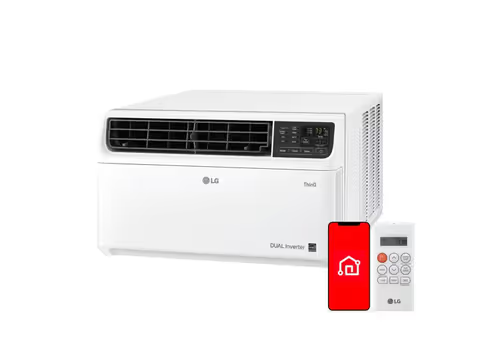
Editor's pick
WindowENERGY STAR
LG Dual Inverter LW1022IVSM
Cooling
10,000 BTU
Covers
450 ft²
Efficiency
15 CEER
Noise
44 dB
$429 est.
typical retail priceWisconsin summers bring warm, humid stretches to Milwaukee, Madison, and the southern half, with Great Lakes moisture and corn-belt dewpoints driving sticky July–August afternoons. Lake Michigan moderates the shoreline; inland runs hotter. Long winters keep the cooling season short and concentrated.
Updated June 2026
Dehumidification matters more than raw tonnage — humid Wisconsin rooms feel worse than the thermometer reads. Favor inverter units that run long and dry, and for the short season a strong mid-range unit usually beats paying up for maximum efficiency.
Estimated at Wisconsin's average residential rate (~16¢/kWh, approximate) and 8 hours/day. "Per season" assumes 4 cooling months. Your utility rate and usage will vary.
| Unit | Efficiency | Est. / month | Est. / season |
|---|---|---|---|
| Senville LETO SENL-12CD Mini-split | 21.2SEER2 | $25 | $100 |
| LG Dual Inverter LW1022IVSM Window | 15CEER | $26 | $104 |
| BLACK+DECKER BPACT14WT Portable | 6.1CEER | $88 | $352 |
Use the Mixed/Temperate zone for the humid summers. A 300 ft² room lands near 6,500–7,500 BTU, toward the top inland and in muggy Milwaukee.
An inverter window unit or mini-split — long, steady cycles handle the lake-region humidity better than fixed-speed units that blast and short-cycle.
At ~16¢/kWh and 8 hours a day, an efficient 12,000 BTU unit runs about $25–34/month across the summer.
Electricity rates are approximate state averages; check your utility bill for your exact rate.