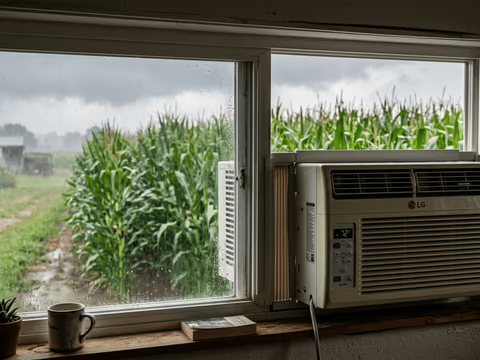
The short answer
If your room has a horizontal sliding window (the kind that slides side-to-side, or cranks out), a standard window air conditioner will not fit it — those are built for double-hung windows that slide up and down. The clean fix for almost everyone is a portable AC with a sliding-window kit: the kit panel stands vertically in the slider track and the exhaust hose vents through it.
Our pick for most sliders is the Midea Duo MAP14S1TBL — a quiet, efficient dual-hose portable — with the smaller Hisense dual-hose for compact rooms. Want something permanent that frees the window? Skip to the through-the-wall and mini-split options.
Why a standard window AC won't fit a slider
A conventional window unit is landscape-shaped — wider than it is tall — because it is engineered for a double-hung window: it rests on the sill, you lower the upper sash onto the top of the chassis to lock it down, and the accordion side curtains seal the gaps. A horizontal sliding window has none of that. The opening is short and wide, there is no sash to come down and hold the unit, and nothing to seal against. Forcing one in is unsafe — it can fall out — which is exactly why the searches for "window AC for a sliding window" almost always end at a different type of unit.
The simple fix: a portable AC + sliding-window kit
A portable AC sits on the floor and vents hot air out through a hose, so it does not care what shape your window is — it only needs a vent panel that seals the opening. Every portable ships a window-kit panel; for a side-slider you orient it vertically in the track. Pick an inverter dual-hose model and you get near-window-unit quiet and efficiency:
The Midea Duo MAP14S1TBL is the one to beat — a dual-hose inverter that cools ~550 ft², idles at 42 dB, and runs far more efficiently than a typical single-hose portable, around $450. For a smaller room the Hisense 8K dual-hose is compact, 42 dB, and a strong 13.5 CEER for ~$330. If quiet is everything, the LG Dual Inverter LP1419IVSM drops to 44 dB with LG build quality (~$649). The full field is in our best portable ACs guide.
Fitting the kit to your slider (measure first)
Portables include a kit for a standard window, so a tall side-slider sometimes needs one extra step. Before you buy, measure the height of the track opening (for a side-slider) or the width (for a crank/awning). Then match it: most brands sell a sliding-window extension that lengthens the panel, and for anything unusual a cut-to-fit acrylic or plexiglass panel with a hose port is a cheap, tidy solution. Seal the remaining gaps with the included foam and a weatherstrip so you are not venting your cooled air straight back outside.
Permanent routes: through-the-wall and mini-split
If you own the place and want the window back, two options skip it entirely. A through-the-wall unit installs in a wall sleeve — the LG LT1016CER is a popular mid-size 9,800 BTU wall AC (~$549) that covers ~450 ft². It needs a wall opening and sleeve, so it is a bigger commitment, but it frees the window and seals better than any kit.
For the quietest, most efficient permanent answer, a ductless mini-split needs only a 3-inch line-set hole — no window at all. The Senville LETO 12K runs a near-silent 28 dB at 21+ SEER2 (~$799 plus install). It costs more upfront and wants a proper or DIY-rated install, but nothing beats it on noise and running cost.
What about "casement / slider" window units?
A handful of brands do make tall, narrow window units designed to stand vertically in a casement or slider window. They exist and can work if you find one that matches your opening — but the category is small, availability is patchy, and we do not currently test one, so we will not pretend to rank them. For the vast majority of sliders, a portable with the right kit is cheaper, in stock, and something you can move to another room next summer.
Before you buy: size the room, then the window
Size the room first — about 20 BTU per ft², adjusted for sun and insulation. The BTU calculator does it in a minute; an oversized portable just runs louder and leaves the room clammy. Then confirm the fit: measure your slider opening and check the unit ships (or sells) a kit that reaches it. Compare every portable and wall unit side by side — noise, efficiency, coverage — in our comparison table.
Featured units
Specs and running costs for the units referenced in this guide:
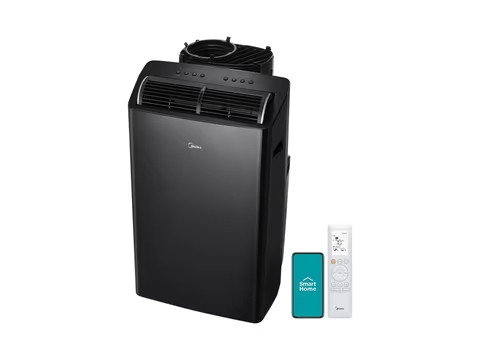
Midea Duo MAP14S1TBL
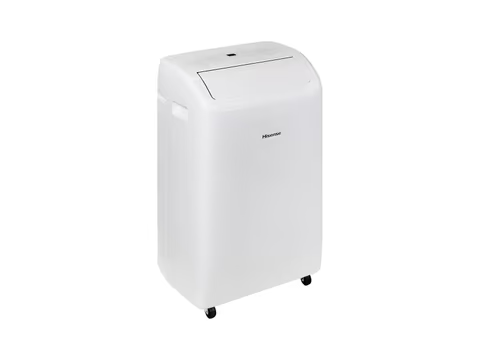
Hisense 8K Dual-Hose Inverter
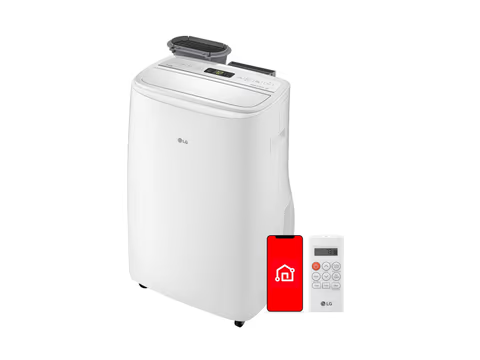
LG Dual Inverter LP1419IVSM
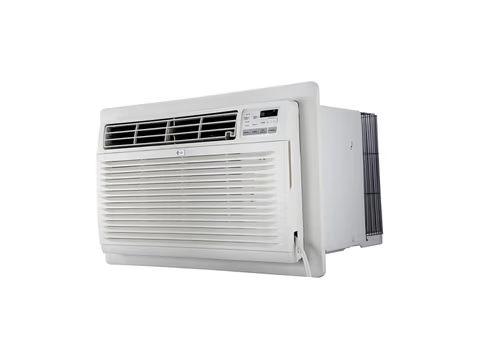
LG LT1016CER Through-Wall
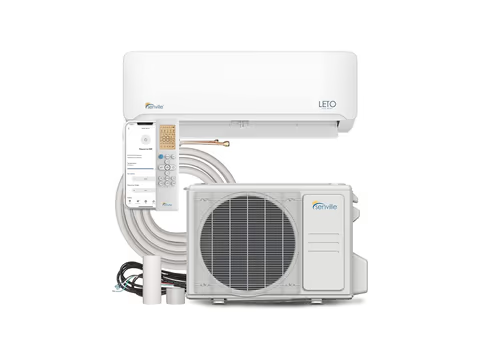
Senville LETO SENL-12CD
Frequently asked questions
Can you put a regular window AC in a sliding window?
No, not safely. A standard window unit is wider than it is tall and relies on a double-hung sash closing down onto the top of the chassis to hold it and seal the gap. A horizontal slider opening is short and wide, so a normal unit has nothing to secure it and can't seal — a real fall hazard. Use a portable with a sliding-window kit, a through-the-wall unit, or a mini-split instead.
What kind of air conditioner works with a horizontal sliding window?
A portable AC with a sliding-window vent kit is the simplest fix: the kit's panel runs vertically in the slider track and the exhaust hose vents through it. If you'd rather have something permanent that leaves the window usable, a through-the-wall unit or a ductless mini-split skips the window entirely.
Do they make window ACs specifically for sliding windows?
Yes — a few brands make tall, narrow casement/slider units built to sit vertically in a slider or crank-out casement window. But it's a small niche with limited availability, and we don't currently test one. For most people a portable with the correct kit is cheaper, far easier to find, and moves between rooms.
Will a portable AC's window kit fit my sliding window?
Usually, with adjustment. Most portables ship a kit sized for a standard double-hung window; for a tall side-slider you may need the sliding-window extension the brand sells, or a cut-to-fit acrylic panel. Measure the height of your slider's track opening before buying so you know whether the included kit reaches.
What size AC do I need for the room?
Size to the room, not the window — roughly 20 BTU per square foot adjusted for sun and insulation. Our BTU calculator does the adjusted math in a minute. Oversizing is the most common mistake and makes a portable noisier, damper, and less efficient.
Not sure what size you need?
Our calculator factors in climate, sun, and insulation — and estimates your monthly running cost.
Run the BTU calculator