-480x360.jpg)
The short answer
When an AC runs but does not cool, the cause is usually airflow or maintenance — not a broken compressor. Start with the two fixes that solve most cases: replace a dirty air filter and make sure the thermostat is set to Cool, below room temperature. If those do not help, work down the list below from cheapest to most serious.
A quick rule of thumb: if warm air blows from the vents, the problem is usually cooling-related (refrigerant, a frozen coil, dirty coils). If little air moves at all, it is an airflow problem (filter, fan, vents) — or the unit may be the wrong size for the room. Use the BTU calculator to confirm your room is matched to the unit before assuming a fault.
1. A clogged air filter
This is the single most common cause. A filter caked with dust chokes airflow across the indoor coil, so the unit runs constantly but moves little cool air — and in bad cases the coil freezes over. Pull the filter out and hold it to the light; if you cannot see through it, clean or replace it.
Check the filter monthly during cooling season and replace (or wash, for reusable filters) every one to three months. It is a five-minute job that restores airflow, lowers your bill, and prevents most of the other problems on this list.
2. Wrong thermostat settings
It sounds obvious, but a fan set to ON instead of AUTO blows uncooled air between cooling cycles, which feels like the AC is broken. Set the fan to AUTO, the mode to Cool, and the target a few degrees below the current room temperature. On a window or portable unit, confirm it is in Cool mode and not Fan or Dry mode.
If you have a smart thermostat, check the schedule — a setback you forgot about can let the room drift warm in the afternoon heat.
3. Blocked vents and weak airflow
Furniture over a return vent, closed supply registers, or a dirty blower wheel all starve the system of air. Walk the room and make sure vents are open and unobstructed. For a window or portable unit, confirm the front intake and the rear (or exhaust hose) are not pressed against a wall or curtain.
Portable units are especially sensitive: a single-hose model pulls room air to cool its condenser and pushes it outside, creating negative pressure that draws hot air back in through gaps. A dual-hose portable avoids this and cools noticeably better in a hot room.
4. A frozen evaporator coil
If you see ice on the coils or the copper line, the unit is iced up — and ice insulates the coil so it cannot absorb heat. The usual culprits are restricted airflow (see the filter and vents above) or low refrigerant. Turn the unit off and let it thaw fully, run the fan only to speed it up, then fix the underlying airflow problem before running it again.
If the coil freezes again within a day of thawing and the filter is clean, the cause is almost always low refrigerant — which needs a professional.
5. Dirty condenser coils outside
The outdoor unit (or the rear of a window or portable unit) sheds the heat your AC removes from the room. When those coils are matted with dust, grass clippings, or cottonwood fluff, the system cannot dump heat and the room never cools. Power the unit off and gently rinse the coils with a garden hose from the inside out; keep at least two feet of clear space around an outdoor condenser.
This is routine maintenance, not a repair — doing it each spring keeps efficiency up and is the cheapest way to protect a unit you already own.
6. The unit is the wrong size for the room
An undersized AC cannot keep up on the hottest days — it runs nonstop and still loses ground. An oversized one is worse than it sounds: it blasts cold air, hits the set temperature in minutes, and shuts off before removing humidity, leaving the room cold but clammy and never running long enough to cool evenly.
If the room has always struggled to cool, the unit may never have been sized right. Our BTU calculator factors in square footage, climate, sun exposure, and insulation, and our sizing guide explains how to read the result.
7. Low refrigerant or a leak
Refrigerant is not consumed like fuel — if it is low, there is a leak. Signs include warm air from the vents, a hissing or bubbling sound, ice on the lines, and a system that runs forever without cooling. This is not a DIY fix: handling refrigerant requires EPA certification, and a leak has to be found and sealed before recharging.
If you suspect refrigerant, turn the unit off to avoid damaging the compressor and book a licensed HVAC pro.
8. A tripped breaker or electrical fault
If the indoor fan runs but the outdoor compressor is silent, a tripped breaker, blown fuse, or failed capacitor may have taken the compressor offline. Check the breaker panel and reset once; if it trips again immediately, stop — a repeatedly tripping AC circuit points to a real electrical fault that needs a technician.
For window and portable units, plug the unit straight into a dedicated wall outlet, not a power strip or extension cord, which can drop voltage and trip the unit's own breaker.
When to call an HVAC professional
Call a pro when the basics check out but the unit still will not cool: anything involving refrigerant, a compressor that will not start, electrical faults that trip the breaker, or a coil that keeps freezing after the filter and airflow are clean. These are not safe or legal to DIY, and a cheap diagnostic visit often prevents a far more expensive failure.
You can find a top-rated HVAC contractor in your state in our directory — and if the unit is old and the repair is expensive, our buying guides and comparison tool will help you choose a more efficient replacement.
Featured units
Specs and running costs for the units referenced in this guide:
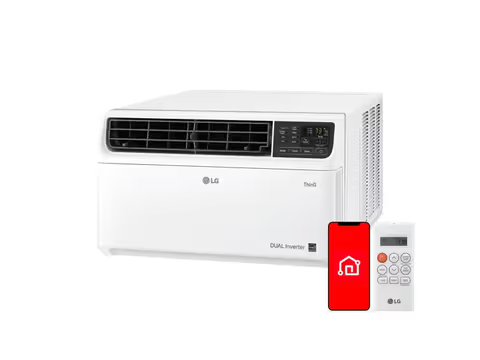
LG Dual Inverter LW1022IVSM
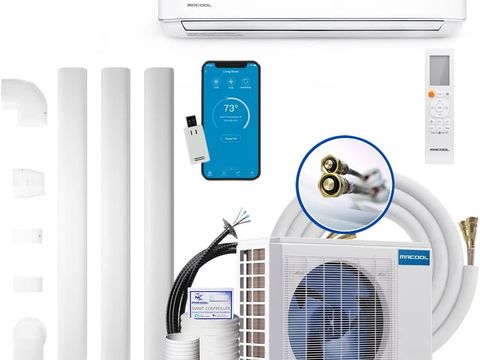
MRCOOL DIY 4th Gen 12K
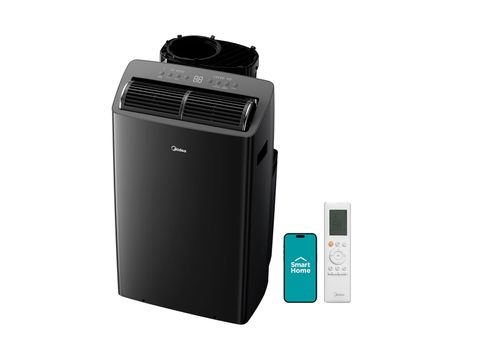
Midea Duo MAP12S1TBL
Frequently asked questions
Why is my AC running but not cooling?
The most common reasons are a clogged air filter, a thermostat set wrong (fan on ON instead of AUTO, or not in Cool mode), dirty condenser coils, or a frozen evaporator coil — all of which restrict the system's ability to move or shed heat. Start with the filter and thermostat; together they fix most cases.
Why is my air conditioner blowing warm air?
Warm air from the vents usually points to a cooling fault rather than an airflow one: low refrigerant from a leak, a frozen coil, dirty outdoor coils, or a compressor that has stopped. Confirm the unit is in Cool mode first, then inspect the coils; persistent warm air with a clean filter typically means refrigerant or compressor trouble, which needs a pro.
Can a dirty filter really stop an AC from cooling?
Yes. A clogged filter chokes airflow across the indoor coil, so the unit runs constantly but delivers little cool air, and in bad cases the coil ices over and stops cooling entirely. Checking the filter monthly and replacing it every one to three months is the single most effective thing you can do.
My AC freezes up — what should I do?
Turn it off and let the ice melt completely (run the fan only to speed it up), then fix the cause: a dirty filter or blocked vents restricting airflow, or low refrigerant. If the coil refreezes within a day and the filter is clean, the refrigerant is likely low and you should call a professional.
When should I call a professional instead of doing it myself?
Call a licensed HVAC pro for anything involving refrigerant, a compressor that will not start, electrical faults that trip the breaker, or a coil that keeps freezing after you have cleaned the filter and coils. These are not safe or legal to do yourself, and a small diagnostic fee often prevents a much larger repair.
Not sure what size you need?
Our calculator factors in climate, sun, and insulation — and estimates your monthly running cost.
Run the BTU calculator