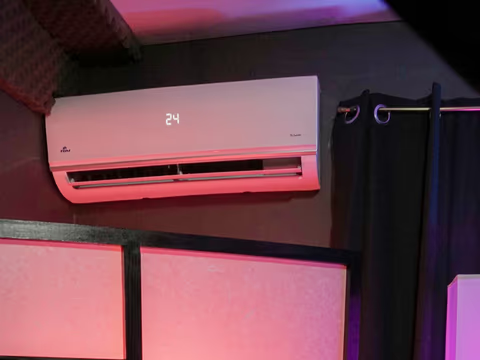
First: what does the smell tell you?
A window AC odor is a diagnosis — it points straight at the cause. The large majority are moisture and mold, cleanable in about twenty minutes. But two smells mean stop and check your safety first, so start there before you reach for a cleaning brush.
Two smells to take seriously — right now
Rotten eggs or sulfur: treat it as a possible natural-gas leak — gas utilities add that exact odor to gas on purpose. Leave the area and call your gas utility or 911, and do not flip switches or unplug anything (a spark is the risk). Only once gas is ruled out consider the benign cause for a window unit: a small animal that died inside the housing over the off-season.
Burning, acrid, or fishy: an electrical smell — overheating motor or melting wire insulation, which gives off a distinctly fishy odor — means you should unplug the unit and have it inspected. The one exception is a faint, brief burning-dust smell the first time you run it each season: dust burning off the coil, which clears in a few minutes. A persistent or sharp burning smell is not that. When in doubt, unplug it.
Musty or mildew — the #1 smell (it is mold)
A musty, damp, or earthy smell — the most common by far — is mold or mildew growing where water sits: the drain pan, the coil, and the filter. An AC pulls moisture out of the air, and if that water does not drain and dry, the cold coil becomes a petri dish. The fix: wash the filter, clean the coil and drain pan (the deep-clean is below), make sure the unit tilts slightly toward the outside so water drains, and — the habit that actually prevents it — run fan-only for 10–15 minutes after each cooling session to dry the coil.
Vinegar or sour — bacteria, or a refrigerant clue
A sharp vinegary or sour smell is usually the same story as musty — bacterial and fungal growth on a damp coil — so the same clean-and-dry routine fixes it. One alternative worth knowing: a refrigerant leak can smell chemical, more like nail-polish remover than sour. If the odor reads "chemical" and the unit is also cooling poorly or icing up, suspect a leak — a pro repair, and often a replacement on a small window unit.
Dirty socks, feet, wet dog, or "pee" — dirty-sock syndrome
These all point to the same thing: colonies of bacteria and mold caked on the evaporator coil — a phenomenon HVAC techs literally call "dirty sock syndrome." An ammonia or cat-pee note is often a moldy coil too, though a genuine urine smell can mean a pest nested inside during storage. The cure is a thorough coil clean plus, for stubborn cases, an antimicrobial coil spray — then the fan-dry habit so it does not come back.
The permanent fix: clean it right, then keep it dry
A proper clean beats any spray-in deodorizer, which only masks the smell. Unplug the unit, pull the front grille and filter, and wash the filter in warm soapy water (let it fully dry). Vacuum or gently brush the coil fins, and wipe out the drain pan with a mild bleach-or-vinegar solution to kill the biofilm. Confirm the drain channel is clear and the unit tilts slightly outward so condensate runs away, not back onto the coil.
Then prevent the regrowth: run fan-only for 10–15 minutes after cooling to dry the coil, clean the filter monthly in season, and do not set the thermostat so low the coil stays permanently soaked. Five minutes of drying habit is the whole difference between a fresh unit and a moldy July.
When it is time to replace
If the mold keeps returning no matter how you clean — common on old units where it has colonized deep in the coil — or the smell turns out to be a refrigerant leak, replacement is the honest call. An inverter unit helps, because it runs the fan long and low and keeps the coil drier than a fixed-speed unit that blasts and stops. Our overall pick, the LG LW1022IVSM, the efficient LG LW8022IVSM, and the tool-free, easy-to-clean Windmill AC are all low-maintenance replacements — the full field is in our best window ACs guide. Still smelling something after a new unit and a clean? It may not be the AC — check the room’s drain, carpet, or vents, and our AC not cooling troubleshooter for the rest.
Featured units
Specs and running costs for the units referenced in this guide:
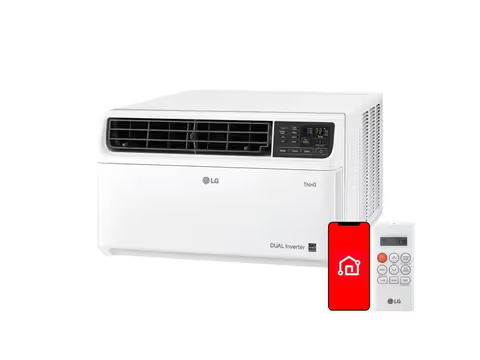
LG Dual Inverter LW1022IVSM
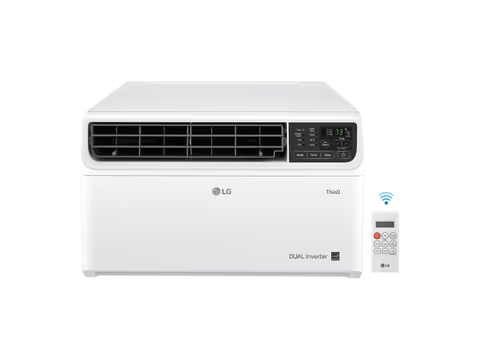
LG Dual Inverter LW8022IVSM
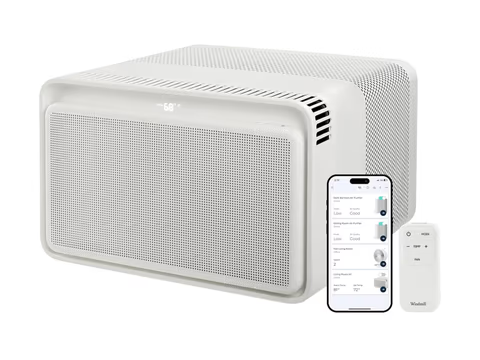
Windmill AC
Frequently asked questions
Why does my window AC smell musty or like mildew?
Mold or mildew growing on the coil, in the drain pan, or in the filter — the most common AC smell by far. The unit pulls moisture from the air, and if it does not drain and dry, the damp coil grows mold. Wash the filter, clean the coil and drain pan, and run the fan for 10–15 minutes after each cooling session to dry it out.
Why does my window AC smell like vinegar?
Usually bacterial or fungal growth on a damp coil — the same cause as a musty smell, and the same clean-and-dry fix. Occasionally a sharp chemical scent (more like nail-polish remover than sour) points to a refrigerant leak, especially if the unit is also cooling poorly or icing up; that is a pro repair, and often a replacement on a small window unit.
Why does my AC smell like rotten eggs or sulfur?
Treat a rotten-egg or sulfur smell as a possible natural-gas leak first — utilities add that odor to gas deliberately. Leave the area and call your gas utility or 911; do not flip switches. Only after gas is ruled out consider the harmless cause for a window unit: a small animal that died inside the housing over winter.
Why does my window AC smell like burning or fish?
An electrical smell — burning, acrid, or fishy (melting wire insulation smells fishy) — means an overheating motor or degraded wiring. Unplug the unit and have it inspected. The one exception is a faint, brief dust-burning smell the first time you run it each season, which clears in a few minutes; a persistent or sharp burning smell is not normal.
How do I get the smell out of my window AC permanently?
Clean it, do not just mask it: wash the filter, clean the coil and drain pan (a mild bleach or vinegar solution kills the biofilm), and clear the drain. Then prevent regrowth — run fan-only 10–15 minutes after cooling to dry the coil, clean the filter monthly in season, and keep the unit tilted slightly outward so water drains. Deodorizer sprays only cover the smell.
Not sure what size you need?
Our calculator factors in climate, sun, and insulation — and estimates your monthly running cost.
Run the BTU calculator
-480x360.avif)