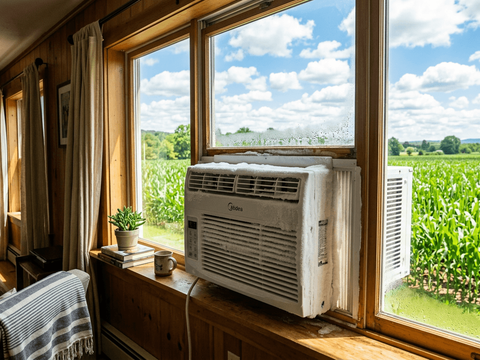
First: turn it off — do not run a frozen AC
Before you diagnose anything, switch the unit to fan-only or off. Running the compressor while the coil is a block of ice is how a cheap fix becomes a dead unit. Fan-only pushes room-temperature air over the coil and thaws it fastest (1–3 hours); off works too, just slower. Never chip at the ice — the evaporator fins puncture easily. Lay a towel down for meltwater, and once it is fully clear, work through the causes below in order.
The 7 causes, ranked most-likely first
1. Dirty air filter — the #1 cause. A clogged filter starves the coil of warm air, so it drops below freezing. Pull the filter, wash or replace it, and check it monthly in season.
2. Blocked coil or vents — dust on the evaporator fins, or furniture/curtains against the unit, does the same thing as a dirty filter. Clear the airflow and gently clean the fins.
3. Fan set too low (or failing) — low fan speed moves too little air over the coil. Run a higher fan speed in cool/humid conditions; if the fan barely spins on high, the motor may be failing.
4. Running when it is too cold outside — most window units are not built for below ~60°F. Cool nights overcool the coil. Turn it off or use fan-only overnight.
5. Thermostat set too low or sensor bumped — a setpoint in the low 60s, or a sensor knocked out of place, makes the compressor run non-stop and ice over. Raise the setpoint a few degrees.
6. Clogged condensate drain — water that cannot drain backs up onto the coil and freezes. Clear the drain channel and make sure the unit has its slight rearward tilt.
7. Low refrigerant — a leak drops the pressure and the coil temperature with it. This is the one you cannot DIY (below), but it is also the least common on a filter you have been cleaning.
Airflow is the culprit ~90% of the time
Causes 1–3 are all the same problem — not enough warm air over the coil — and together they explain the large majority of frozen window units. The fix is a ten-minute routine: pop the front grille, pull the filter and wash it under the tap (or replace a disposable one), and while it is out, look at the aluminum fins behind it. If they are furred with dust, vacuum them with a brush attachment or a coil brush, working along the fins, not across them. Put the filter back only when dry, and make sure nothing — a couch, a curtain, a stack of boxes — is choking the front or the outdoor side.
When the weather is the problem
If your unit only ices over on cool nights or damp, rainy days, the cause is causes 4–6, not a fault. A window AC below ~60°F outdoors, or set into the low 60s indoors, chills the coil past freezing even with a clean filter. Raise the thermostat a few degrees, switch to fan-only when it is mild, and turn it off overnight if temperatures drop. On humid days, double-check that the condensate drains freely and the unit tilts very slightly toward the outside so water runs away from the coil rather than pooling and freezing.
Low refrigerant: the one you cannot DIY
If the unit refreezes with a spotless filter, clear fins, and warm weather, suspect low refrigerant. Refrigerant is a sealed charge — it does not get used up, so "low" means a leak. Window chassis are not designed to be recharged in the field, and a shop recharge on a sealed unit routinely costs more than the unit is worth. Do not buy a "top-up" can and gamble. The honest math: on a budget unit, replace it; on a premium inverter, get one quote before deciding.
Prevent it: a 5-minute monthly routine
Clean or swap the filter monthly in cooling season — this alone prevents most freeze-ups. Vacuum the coil fins at the start of each summer. Keep furniture and curtains clear of both faces. Run a higher fan speed on cool or humid days, and turn it off below ~60°F. Five minutes a month is the difference between a unit that lasts a decade and one that ices over every July.
Repair or replace? When a freeze-up means it is time
If it is airflow, fix it and move on. If it is a refrigerant leak, or the unit is more than ~8 years old and struggling, replacement is usually the smarter money — and an inverter unit resists freezing better because it modulates airflow and temperature instead of blasting cold. Our overall pick, the LG Dual Inverter LW1022IVSM (15 CEER, 44 dB, ~$429), the design-forward Windmill AC, and the bulletproof budget Frigidaire FFRA051WAE (~$169) are all reliable replacements. See the full field in our best window ACs guide, and if the room is still not cooling once it thaws, our AC not cooling troubleshooter covers the rest.
Featured units
Specs and running costs for the units referenced in this guide:
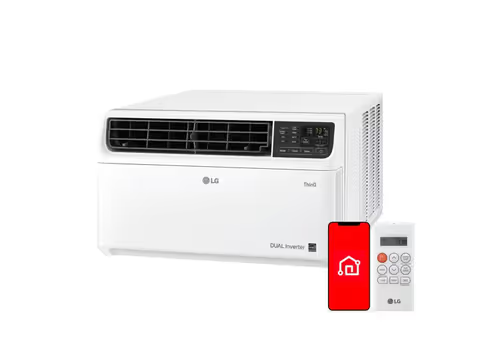
LG Dual Inverter LW1022IVSM
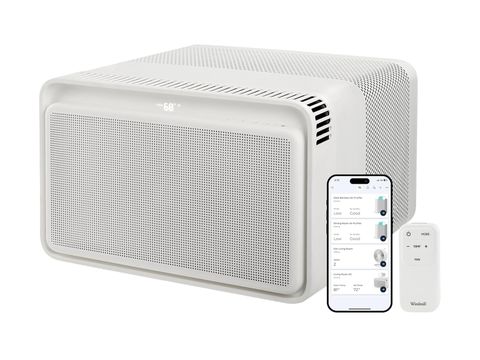
Windmill AC
Frigidaire FFRA051WAE
Frequently asked questions
Can I run my air conditioner while it is frozen?
No. Running a frozen unit makes the compressor work against a block of ice and can burn it out — the most expensive way to turn a $10 filter problem into a new AC. Switch it to fan-only (or off) and let it thaw completely before you run cooling again.
How long does a frozen window AC take to thaw?
Usually 1–3 hours with the unit off or on fan-only; a thick block of ice takes longer. Do not chip the ice off — you can puncture the coil, which is a repair that is rarely worth it on a window unit. Put a towel down for the meltwater.
Why does my window AC freeze up at night but not during the day?
Because nights are cooler. Most window units are not designed to run when it is below about 60°F outside — when the room and outdoor air drop overnight, the coil overcools and ices over. Raise the thermostat, switch to the fan setting, or just turn it off overnight.
Will a frozen AC fix itself?
It will thaw once it is off, but it will refreeze if you do not fix the cause. About nine times in ten the cause is airflow — a dirty filter or blocked coil — which is a free DIY fix. If it refreezes with a clean filter and clear vents, suspect low refrigerant, which needs a pro.
Is a low-refrigerant window AC worth repairing?
Often not. Refrigerant is not 'used up' — low means a leak, and recharging a sealed window chassis frequently costs more than a new unit. For a $150–250 budget unit it is usually cheaper to replace; for a premium inverter it can be worth a quote first.
Not sure what size you need?
Our calculator factors in climate, sun, and insulation — and estimates your monthly running cost.
Run the BTU calculator
-480x360.jpg)
-480x360.png)