The short answer
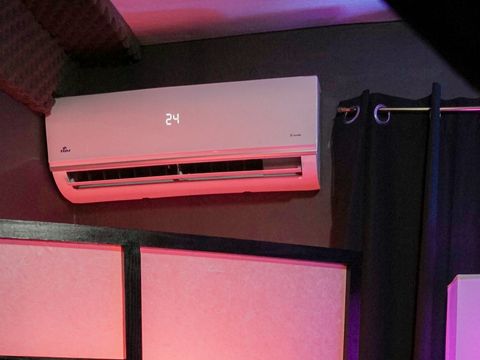
In a bedroom, the number that matters is the low-fan decibel rating, not the BTU count — a unit that cools fast but roars at 55 dB loses to one that hums at 42 dB every single night. The quietest window pick we track is the GE Profile ClearView at 41 dB, with the U-shaped Dreo DR-HAC002 right behind and cheaper. Own your place? A ductless mini-split (19–28 dB) is a different league.
The catch is size. An oversized AC short-cycles — repeating the loudest moment, the compressor kicking on, all night. Size to the room first with the BTU calculator, then pick the lowest dB that fits.
How quiet is quiet enough to sleep?
For sleep, aim for 45 dB or lower on the low or sleep setting — roughly a quiet library. A standard window or portable unit runs 52–58 dB (about normal conversation), which is exactly the range that keeps you from drifting off. The best window units reach 41–44 dB; ductless mini-splits drop to 19–28 dB, below a whisper. For reference: 30 dB is a whisper, 40 a quiet library, 50 a running refrigerator, 60 a conversation. The full dB ladder across every AC type is in our quietest air conditioners guide.
Size it to the bedroom — bigger is louder, not better
Most bedrooms are 100–350 ft², which is 5,000–8,000 BTU of cooling. But here is the counterintuitive part: an inverter 8,000 BTU unit running low is usually quieter than a fixed-speed 5,000 BTU one running flat out, because it modulates instead of blasting. So do not chase a small unit for quiet — chase an inverter. And never oversize: too much capacity short-cycles and repeats the loud start-up. The calculator sizes your room in a minute.
Best quiet window AC for a bedroom
The GE Profile ClearView AHTT08BC is the quietest window unit we track: 41 dB on low, with a below-the-sill saddle design that seats the compressor outside the closed glass and keeps your window view. 8,300 BTU for ~350 ft², app + voice, ~$399. The trade-off is efficiency (11.4 CEER) — it costs a bit more to run — but for a bedroom, silence wins.
Want quiet, cheaper, and efficient? The U-shaped Dreo DR-HAC002 hits 42 dB at 15 CEER for ~$349 (no app). And the dual-inverter LG LW8022IVSM — 8,000 BTU, 44 dB, a class-leading 15.2 CEER — is the do-everything pick if you want the lowest running cost with app control.
No window to mount in? Portable or mini-split
If your bedroom cannot take a chassis unit, the quietest portable we track is the Hisense dual-hose inverter at 42 dB — as quiet as a good window unit, which is rare for a portable (most run 52–58 dB with the compressor in the room). The full portable field is in our best portable ACs guide.
And if you own the home and want true silence, a ductless mini-split like the Senville LETO 12K runs 28 dB — the compressor lives outside, so the indoor head is just a whisper-quiet fan. It is the bedroom endgame, install and cost aside; when the jump is worth it is covered in our mini-split vs window comparison.
Placement + 4 tricks for a quieter night
Most "loud AC" is vibration, not the compressor. Mount the unit solidly (a support bracket kills the rattle), seal the side gaps with the foam kit, and the noise drops noticeably before you have even changed the fan speed.
Then: put the unit in the window farthest from the head of the bed; run low or sleep mode overnight; size it right so it does not short-cycle (the calculator handles that); and pick an inverter so there is no jarring compressor kick at 2 a.m. Compare every unit’s low-fan dB and efficiency side by side in the comparison table.
Featured units
Specs and running costs for the units referenced in this guide:
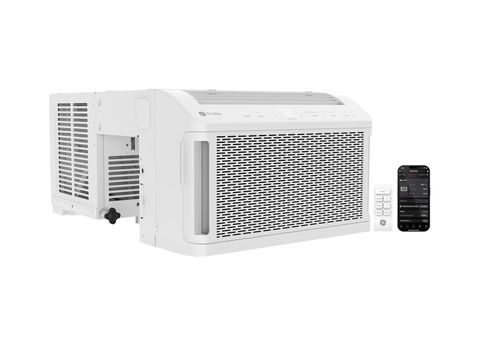
GE Profile ClearView AHTT08BC
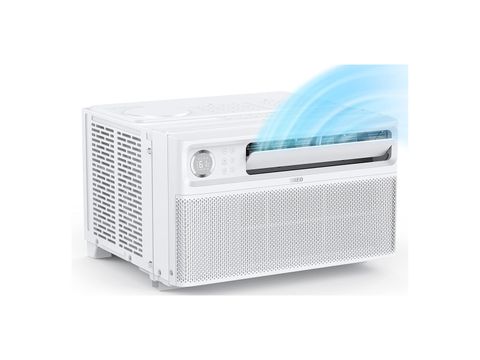
Dreo U-Shaped 8K DR-HAC002
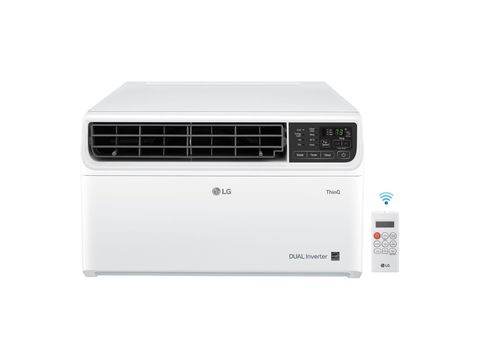
LG Dual Inverter LW8022IVSM
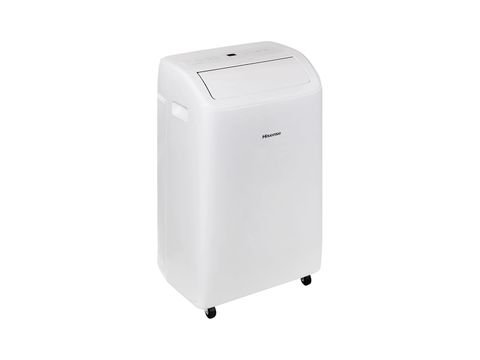
Hisense 8K Dual-Hose Inverter
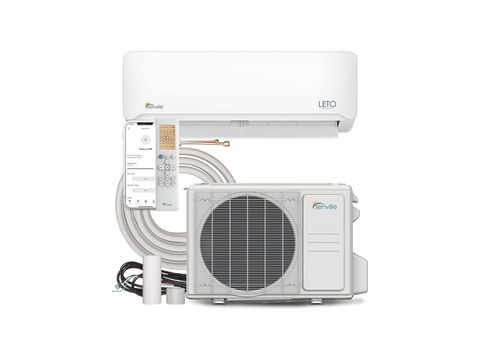
Senville LETO SENL-12CD
Frequently asked questions
How many decibels is quiet enough to sleep next to an AC?
Aim for 45 dB or lower on the low or sleep setting — roughly a quiet library. Standard window and portable units run 52–58 dB (about normal conversation), which is noticeable when you are trying to fall asleep. The best window units reach 41–44 dB, and ductless mini-splits drop to 19–28 dB, below a whisper.
What is the quietest air conditioner for a bedroom?
Among the units we track, the GE Profile ClearView is the quietest window unit at 41 dB — its saddle design seats the compressor outside the closed window. If you own your home and want true silence, a ductless mini-split like the Senville LETO runs 28 dB, quieter than any window or portable unit can manage.
What size air conditioner do I need for a bedroom?
Most bedrooms are 100–350 sq ft, which is 5,000–8,000 BTU — but do not chase a small unit for quiet. An inverter 8,000 BTU model running on low is usually quieter than a fixed-speed 5,000 BTU one running flat out, because it modulates instead of blasting. Size to the room with our calculator and never oversize, which makes any unit noisier.
Where should I put a window AC in a bedroom to make it quieter?
Use the window farthest from the head of the bed, and mount it solidly — most "loud AC" is actually vibration and rattle, not the compressor. A support bracket and a snug foam seal cut the noise noticeably. Then run the low or sleep fan mode overnight.
Are portable air conditioners too loud for a bedroom?
Most are — the compressor sits in the room with you, so a typical portable runs 52–58 dB. The exceptions are inverter dual-hose models like the Hisense, which idle around 42 dB, as quiet as a good window unit. If you have no window at all and own the home, a mini-split is far quieter still.
Not sure what size you need?
Our calculator factors in climate, sun, and insulation — and estimates your monthly running cost.
Run the BTU calculator
-480x360.png)