The short answer
These two cool the same room at the same noise level, so the specs barely separate them. Buy the Windmill if the unit sits in a room you look at and you value the design and the tool-free install; buy the Midea to pay less for the same cooling.
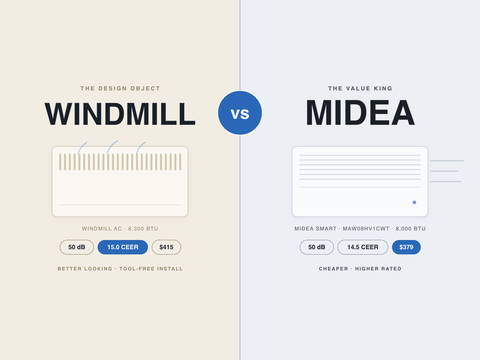
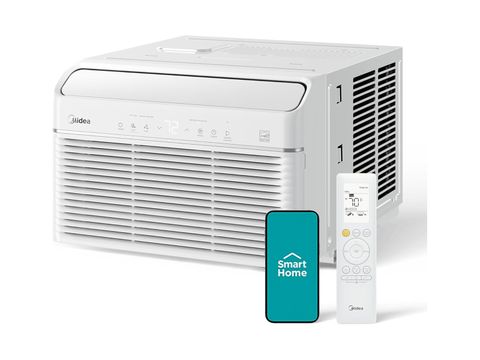
The Windmill AC (8,300 BTU, 15 CEER, 50 dB, ~$415) and the Midea Smart MAW08HV1CWT (8,000 BTU, 14.5 CEER, 50 dB, ~$379) are effectively the same machine on paper. The Midea is cheaper and rates slightly higher; the Windmill looks better and installs more easily. Neither is a dual-inverter, so neither is the quietest option on the market.
Nearly the same machine
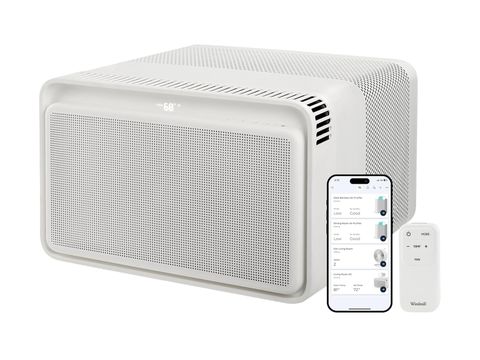
Windmill AC: 8,300 BTU · ~350 ft² · 15 CEER · 50 dB · ENERGY STAR · ~$415 · 4.4★ from 1,900+ owners.
Midea Smart MAW08HV1CWT: 8,000 BTU · ~350 ft² · 14.5 CEER · 50 dB · ENERGY STAR · ~$379 · 4.5★ from 3,400+ owners.
Same coverage, same 50 dB, both ENERGY STAR, both with app and voice control. The Windmill adds scheduling and a marginal efficiency edge; the Midea is about $36 cheaper and has nearly twice the reviews at a hair higher rating. On raw capability this is a tie — which means the decision is about everything the spec sheet does not capture.
Where Midea wins: price and owner satisfaction
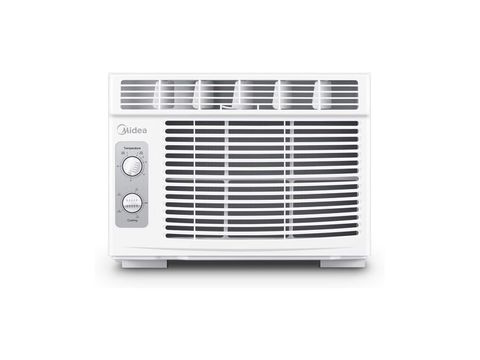
The Midea Smart is cheaper (~$379 vs ~$415), rates slightly higher (4.5★ vs 4.4★) and has been reviewed nearly twice as often (3,400+ vs 1,900+). It is the more proven, better-value machine if you do not care what the unit looks like. And if the budget is the real constraint, the Midea EasyCool drops to around $150 for a small room — 26,000+ reviews at 4.4★ — a value tier Windmill does not play in at all.
“Windmill vs Midea U-shaped” — read this first
A lot of people searching this pairing mean Midea’s U-shaped inverter, the one that lets you close the window onto it. That is a different product from the Midea Smart window unit compared above, and we do not currently stock it — so we are not going to pretend to review it. Two honest notes: first, the U-shaped Midea is a dual-inverter and would be quieter than both units here, so if U-shaped quiet is the goal, that is a real difference. Second, if you want a U-shaped or saddle unit we have actually vetted, look at the Dreo U-Shaped inverter and the GE Profile ClearView in our quietest air conditioners guide — both keep the sightline and run quieter than the Windmill.
The verdict — and the budget alternative
Buy the Windmill if the AC sits in a visible room, the design matters to you, and you want the easiest solo install. Buy the Midea Smart if you want the same cooling and noise for less money, with a longer owner track record. Buy the Midea EasyCool if the room is small and the budget is the deciding factor.
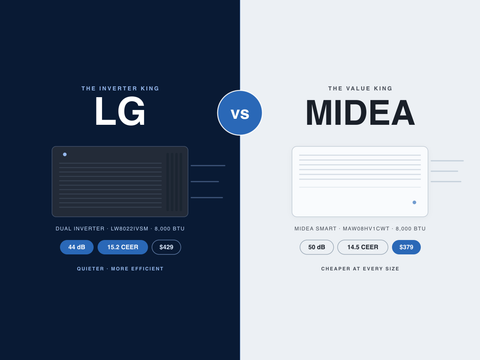
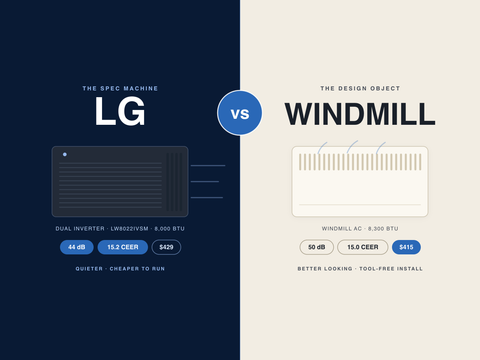
If quiet is what you are really chasing, note that neither of these is an inverter — an LG dual-inverter will beat both at 44 dB. Size the room first with the BTU calculator, see the whole field in the best window ACs guide, and compare every spec in the comparison table.
Featured units
Specs and running costs for the units referenced in this guide:
Windmill AC
Midea Smart MAW08HV1CWT
Midea EasyCool MAW05M1BWT
Frequently asked questions
Is Windmill or Midea better?
They cool the same size room at the same 50 dB, so it comes down to priorities. Windmill wins on looks, front-facing airflow and a genuinely tool-free solo install. Midea wins on price (~$379 vs ~$415), owner rating (4.5★ vs 4.4★) and review volume. Buy Windmill for a room you look at every day; buy Midea to save money on the same cooling.
Is the Windmill AC worth it over a Midea?
Only if design and install ease are worth about $36 to you. On cooling (8,300 vs 8,000 BTU), noise (50 dB for both) and efficiency (15 vs 14.5 CEER) they are within a rounding error. You are paying the Windmill premium for the facade, the upward airflow and the tool-free mount — not for better cooling.
Windmill vs Midea U-shaped — which is quieter?
An important clarification: the Midea unit compared here is the Smart window model, not the U-shaped inverter, which is a different Midea product we do not currently stock. Against the Midea Smart, the Windmill ties at 50 dB. If you specifically want a U-shaped unit for the close-the-window-on-it quiet, look instead at the Dreo U-Shaped inverter or the GE Profile ClearView saddle unit — both are covered in our quietest ACs guide.
Is Midea quieter than Windmill?
No — they are tied at 50 dB on low. Neither is a dual-inverter, so neither reaches the 44 dB of LG’s inverter units. If bedroom silence is the priority, both are beaten by an inverter unit; see our quietest ACs guide for the full dB ladder.
Which is better value?
Midea, clearly. It is about $36 cheaper for effectively the same cooling and noise, and it rates slightly higher with nearly double the reviews. Windmill’s value case rests entirely on design and the install experience, not on the specs.
Not sure what size you need?
Our calculator factors in climate, sun, and insulation — and estimates your monthly running cost.
Run the BTU calculator