The short answer
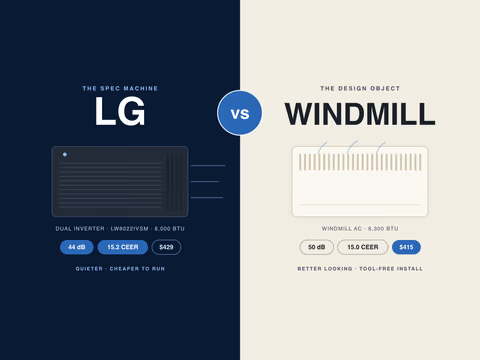
Size-matched, these two are the closest thing to a fair fight in window ACs. The Windmill AC (8,300 BTU, ~$415) and the LG Dual Inverter LW8022IVSM (8,000 BTU, ~$429) cover nearly the same room and cost within $15 of each other. The verdict: LG if you care about noise and running cost; Windmill if you care about how it looks and how painless the install is.
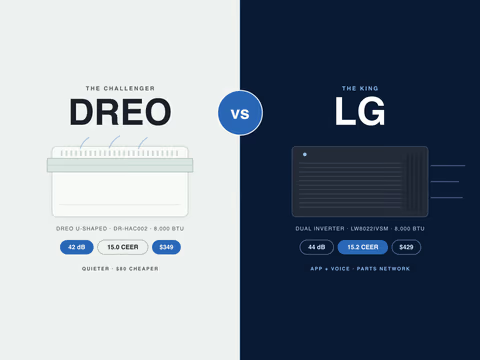
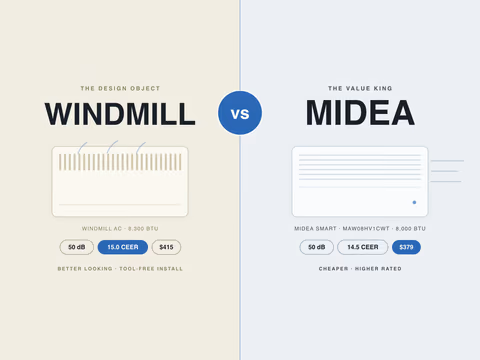
The one spec gap that is genuinely large is noise — 44 dB vs 50 dB on low. Efficiency is near-identical (15.2 vs 15 CEER). Almost everything else is preference.
Head-to-head on the specs that matter
LG LW8022IVSM: 8,000 BTU · ~340 ft² · 15.2 CEER · 44 dB · ~$429 · 4.4★ from 1,700+ owners.
Windmill AC: 8,300 BTU · ~350 ft² · 15 CEER · 50 dB · ~$415 · 4.4★ from 1,900+ owners.
Both are ENERGY STAR certified and both ship app control with Alexa and Google support, so the smart-home question is a tie. Owner ratings are identical at 4.4★. The real decision sits in the next two sections.
Noise: the one gap that is actually big
Six decibels sounds small and is not. Because the scale is logarithmic, 44 dB versus 50 dB is a clearly audible difference — closer to the gap between a quiet library and a running refrigerator than to a rounding error. What buys LG that margin is its dual-inverter compressor: it modulates its speed rather than slamming fully on and off, so there is no jarring start-up surge in the middle of the night. If the unit is going in a bedroom or a home office, this is the deciding spec — see our quietest air conditioners guide for the full dB ladder, and the inverter guide for why modulation matters.
Design and install: where Windmill earns its price
Windmill’s whole pitch is that a window AC does not have to be an eyesore: a clean front face, front-facing airflow that pushes air up and out instead of straight at you, and a genuinely tool-free installation you can do alone. The trade-offs in our data are honest ones — it is pricey for 8,300 BTU, and it comes in one colour. If the unit lives in a room you look at every day, and you are mounting it solo, that is a real reason to spend the same money on slightly less capability.
Efficiency and what it costs to run
Effectively a tie: 15.2 CEER (LG) versus 15 CEER (Windmill). Both are excellent for a window unit and both carry ENERGY STAR. At that level the annual difference is a couple of dollars — not a deciding factor. What matters more is that both sit far ahead of the 11–12 CEER budget class, which uses roughly a third more electricity for the same cooling. Our cost-to-run guide shows the math, and the CEER explainer covers what the number actually measures.
The verdict — and the third option
Buy the LG if the room is a bedroom, you are a light sleeper, or you want the quieter, marginally cheaper-to-run machine. Buy the Windmill if the unit sits in a visible living space, you value the design and the tool-free install, and 50 dB does not bother you.
And if your room is bigger than ~350 ft², neither is the right answer — step up to the LG LW1022IVSM (10,000 BTU, ~450 ft², still 44 dB, ~$429, 4.6★ across 2,800+ reviews), which is our overall window pick. Size the room first with the BTU calculator, see the whole field in our best window ACs guide, and compare every spec side by side in the comparison table.
Featured units
Specs and running costs for the units referenced in this guide:
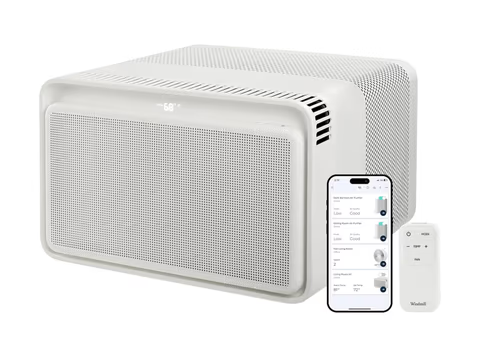
Windmill AC
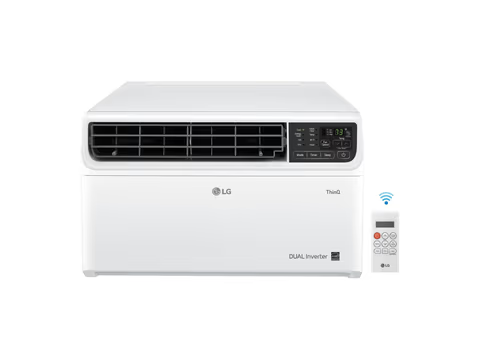
LG Dual Inverter LW8022IVSM
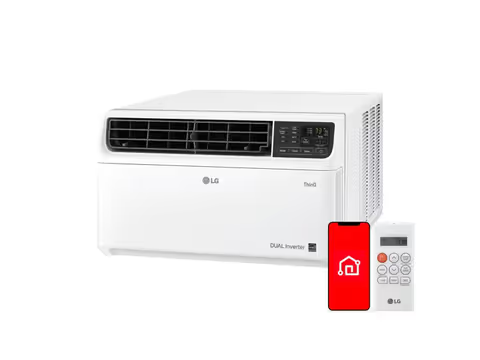
LG Dual Inverter LW1022IVSM
Frequently asked questions
Is the Windmill AC better than LG?
Neither is universally better. The LG LW8022IVSM wins on noise (44 dB vs 50 dB) and efficiency (15.2 vs 15 CEER) for about $14 more. The Windmill wins on appearance, front-facing airflow, and a genuinely tool-free install. For a bedroom, take the LG; for a visible living space where looks matter, the Windmill is defensible.
How much quieter is the LG than the Windmill?
44 dB versus 50 dB on the low setting. Because decibels are logarithmic, 6 dB is a clearly audible gap rather than a marginal one — roughly the difference between a quiet library and a running refrigerator. If the unit goes in a bedroom, that is the deciding spec.
Is the Windmill AC worth the money?
At around $415 for 8,300 BTU you are paying a premium per BTU, and our own data flags exactly that as its trade-off. It is worth it if design and a painless solo install are what you are buying. On pure cooling-per-dollar, budget units beat it comfortably.
Which is better for a bedroom?
The LG, on noise alone — 44 dB versus 50 dB. Both are efficient enough that running cost is nearly a wash, so the decision comes down to what you hear at 2 a.m.
What size rooms do they cover?
The Windmill is 8,300 BTU for about 350 sq ft; the LG LW8022IVSM is 8,000 BTU for about 340 sq ft — effectively the same room. If yours is larger, neither is right: step up to the 10,000 BTU LG LW1022IVSM, which covers ~450 sq ft at the same 44 dB.
Not sure what size you need?
Our calculator factors in climate, sun, and insulation — and estimates your monthly running cost.
Run the BTU calculator